Showing posts with label pharmaceutical. Show all posts

Day Four of Good News: HIV Therapy


Today’s Managing Health Care Costs Indicator is 2.8 million
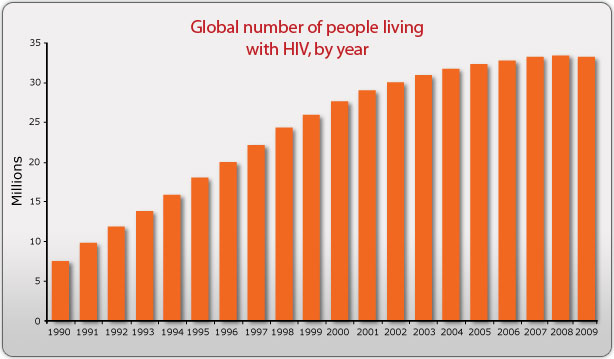

Click on image to enlarge. Source 

When I was in medical school, we still didn’t know what caused AIDS.

When I was in my residency, the HIV virus had been identified, but we were at best able to treat associated infections and cancer.  AZT (zidovudine) was licensed in 1987 – the year I finished my residency.   Everyone I cared for with HIV disease during my training died – most within a year of diagnosis. Some died the very hospitalization of their diagnosis.  When I moved into practice, treatment was improved a bit, but AIDS still had a 100% mortality.

Highly active antiretroviral therapy is one of the miracles of my medical lifetime.  I now frequently see patients who have had HIV for years and even decades. They have to take pills –and the pills are expensive. The pills have some dreadful side effects, too.  But the incidence of pneumocystis pneumonia and Kaposi’s Sarcoma and brain lymphomas and ophthalmologic fungal infections has plummeted.  People with HIV are living meaningful and productive lives with their disease – a huge medical success.

In the early years of highly active antiretroviral (HAART) therapy, the cost of caring for HIV patients declined. We were diagnosing people earlier, and while we spent a lot on medications, we spent far less on hospitalizations than we had in the terrible early days of the HIV epidemic. It’s estimated that HAART has saved 2.8 million years of life – and prevented 2900 cases of HIV infection of infants at birth.

But this is a blog on managing health care costs, and at $14,000 HAART is hardly cheap.  However, there is more evidence this year that treating HIV is a good bargain.

It turns out that HAART dramatically decreases the rate of transmission of HIV. Look at the chart at the top of this post. There are finally fewer global cases of HIV in 2009 than in 2008.  HIV might have peaked –and it’s this cocktail of antiretroviral medicines that have likely made the difference.

It’s rare to have medicines so expensive serve as a viable public health intervention. This is one of those heartening examples. HAART for HIV infection is a great example of how progress in medical care can yield future societal benefits and even cost savings.

Cost Sharing Keeps Cancer Patients From Getting Medications


Today’s Managing Health Care Costs Indicator is $1700


That’s what a patient with leukemia has to spend out of pocket each month to get a new medication for a rare kind of leukemia in an employer health plan with a “fourth tier” for specialty drugs, according to an article from Kaiser Health News in yesterday’s USA Today.    In her case, the full cost of the medication is $6800 per month.

Fourth tiers in drug benefits are increasingly common – as employers struggle with the increasing cost of specialty medications, which often cost $50,000 or more per year.  In a fourth tier, patients must pay a percentage of the cost of a medication (coinsurance), rather than a set dollar copayment.   

These specialty drugs usually target chronic diseases like certain cancers, multiple sclerosis, or rheumatoid arthritis – so their cost recurs month after month after month.   Many of these drugs represent the best advances in clinical medicine in my generation.   I’ve written before about Chronic Myelocytic Leukemia, which was once a rapid death sentence.   Patients now take Gleevec ($40-50,000 per year) and often have normal life expectancy. 

Research  suggests that 10% of oral cancer medication prescriptions are abandoned at the pharmacy -  the portion of medicines with over $500 cost share not picked up by patients is over 4 times as large as those medicines with cost sharing of under $100.

There is no “perfect” answer to this problem .  We want drug companies to do research for novel treatments for rare diseases, but the research is of little social value if many Americans can’t afford the resultant treatment. 

Possible approaches:

  1. 1)   Higher member cost sharing for expensive drugs.   This penalizes those who have already lost the “health lottery,” and causes poor medication adherence.  It does put pressure on drug companies to lower prices, since we are all more price sensitive when exposed to more of the bill. 

  2. 2)   Share cost of these medications over a large population (no higher cost share for specialty medications).   There are good insurance reasons for a large population to share the cost of these medications.  However, this doesn’t exert pressure to lower prices.

  3. 3)   Special programs to fund these medicines for those who can’t afford them. Drug companies offer programs for discounted or free medicine for those in poverty, but these programs are difficult to navigate and often lead to missed doses.  They are also an effective form of price discrimination that lessens pressures to make medicines more affordable.

  4. 4)   Price regulation:  This is the European approach to specialty medication cost – and the US is among few industrialized countries that have no price controls on pharmaceuticals.  On the other hand, price regulation could decrease research for drugs to treat rare diseases. Furthermore, well-meaning price controls are why some inexpensive generic cancer drugs are currently in critically short supply in the US.  

  5. 5)   Allow the FDA to consider cost when it is approving new drugs.  Clearly, this has helped the National Institute for Clinical Excellence (NICE) negotiate lower drug prices in the UK.  On the other hand, the public outcry about drug availability has led the UK to restrict NICE’s ability to consider price when approving medications.

  6. 6)   Perform medical management, such as prior authorization, to prevent overuse of these expensive medications.   This can help prevent waste and make patients try less expensive alternatives first.  However, there are rarely good alternatives for these medicines.  Utilization management programs work best where the problem is overutilization, and in this instance the problem is unit cost.

  7. 7)   Include these expensive medicines in bundled payments, to transfer the risk to providers.   This would help only if providers are now overutilizing these medications, and could discourage physicians from caring for patients who have diseases responsive to these expensive drugs.

  8. 8)   Bulk purchasing can yield higher discounts, but these expensive drugs have a single source.  Required Medicaid “most favored” pricing discourages pharmaceutical companies from offering significant discounts to other payers.  


Where no approach on its own seems efficacious, it’s usually wise to consider a hybrid of various approaches.  With the increase in specialty pharmaceutical costs likely to continue, and few of these drugs going off patent any time soon, there will be continued pressure to lower the acquisition costs of these medications.   Expect to hear more of these horror stories in the future.

Physicians Net Big Fees from Pharmaceutical Talks


Today’s Managing Health Care Costs Indicator is $219,975


That’s how much a single Harvard-affiliated physician made from speaking engagements for pharmaceutical companies during portions of the last two years.   This was reported by the Boston Globe / (reporting with Propublica, a nonprofit investigative reporting organization). Massachusetts physicians were paid $6.3 million during portions of 2009-10 by seven pharmaceutical companies that disclosed their payments.
 

Harvard, to its credit, has announced that its affiliated physicians would no longer be able to be on speakers bureaus as of January of next year.  The investigation also revealed that many of the physicians who got large speaking fees from pharma  were previously disciplined by their state medical boards. In one instance, a physician who was admonished by the FDA for making false claims for one pharmaceutical company continued to collect speaking fees from other pharmas.  Of course, many physicians who speak on behalf of pharmaceutical companies are top researchers in their fields.

I believe that most of the physicians giving pharmaceutical-sponsored talks represented their genuine clinical beliefs.  Still, here’s a link  to a New York Times magazine article by a physician who resigned from the speaking circuit when he felt his integrity was being compromised.

It’s impossible to remove all inappropriate financial incentives from the practice of medicine.  It’s also hard to believe that physicians could totally insulate their prescribing behavior when they can double their income from pharmaceutical speeches.   

This is an example of how sunshine is the best disinfectant. The Affordable Care Act requires more such reporting of physician financial relationships, which is a good start.

If you’re interested in seeing if your physician (or you) are in the Propublica database, here’s the link 

Drug Discounts Which Raise Health Care Costs


I’m a value shopper.  I like my clothes with large “percent off” labels.  Like many people, I want to be guaranteed that I’ll get the lowest price around.  But there is growing evidence that apparent deals to help us get lower prices on medications are costing American insurers and consumers billions of extra dollars.

Here are four examples of apparent discounts that are anything but a good deal.

1) Medicaid “Most Favored Nation”
Medicaid is guaranteed rebates from the pharmaceutical industry, based on the Omnibus Reconciliation Act of 1990.   The amount of these rebates will increase under the Affordable Care Act (health care reform of 2010). Further, Medicaid has a “most favored nation” clause under which any pharmaceutical company which sells a drug for less than the net Medicaid price must send a rebate to every state Medicaid program to ensure it got the lowest price around.
 Unfortunately, game theory shows is that most favored nation clauses actually RAISE prices. They make the supplier realize that the cost of discounting is very high, and thus they reinforce supplier price discipline.  Pharmaceutical companies that used to give Kaiser a huge discount, for instance, would suddenly have to give that same discount to 50+ Medicaid programs, which together represent almost a quarter of all pharmaceutical purchases.  Kaiser –say goodbye to your discount.

This works in the hotel business too.  Marriott (and others) promise that you get the cheapest price on their own website.  This forces them to avoid selling their surplus rooms at a very low rate, because they might then have to give a refund to people who purchased at the full rate.  Hence, an apparent discount leads to higher prices.

Here’s a link to a wonky Rand article showing that the Medicaid most favored nation clause raised the overall price of drugs by about 4%.   Harvard Link  NonHarvard Link 

2) Novartis Covers Copayments for Gilenya, a new oral multiple sclerosis drug.

Novartis just announced that it will charge $48,000 per year for its new MS medication.   Gilenya is reported to work as well as a number of other biopharmaceuticals, but requires no injection.  The drugs it replaces are among the most expensive around– they tend to cost between $20 and $30,000 annually. 

Novartis will give the medicine away to those with income less than 500% of the federal poverty level, and will cover many or even most copayments or coinsurance for others. 

Who could argue with that deal?

In fact, the fixed costs of drug manufacture are large, and variable costs are low.  Novartis will maximize its profit by offering the medicine without allowing patient price sensitivity to reduce demand.   Most of those who will take the medicine will switch from the less expensive medications. Hence, the total amount paid for effective MS medications will rise because Novartis is offering the drug for reduced prices.

3) Medicis, the maker of Solodyn, an extended release minocycline for acne, offers a card that guarantees a $10 per month copayment for this medicine, which otherwise costs over $400 per month. 

This might seem like a good deal, but generic minocycline (taken twice a day) costs 75 cents a pill!   Here’s a pharmacist’s rant on the topic (a bit obscene –don’t click unless you’re ready for some expletives)  

The discount card is a great idea for the pharmaceutical company, which has taken a generic drug that can be purchased wholesale for pennies and converted it into a very expensive brand name medicine.  For consumers and the overall health care budget, this is a bum deal indeed.

4) The pharmaceutical industry has volunteered to give Medicare beneficiaries 50% off the price of brand name drugs when they are in the “donut hole” between spending $2840 and $4550 each year.

Again, how can we go wrong with 50% off?

Brand names remain substantially more than twice as expensive then generics within the same class.  For instance, generic simvastatin to lower cholesterol costs about a dollar a day retain (drugstore.com, 20mg), while brand name Lipitor costs over $3 per day (drugstore.com, 10mg).  So, Medicare beneficiaries who have no generic choice will do well with the discount. However, Medicare beneficiaries who are convinced to take the discount instead of moving to a generic will continue to pay more than they should.

We have to look at the total cost of care – not just the prices or the discount for a particular product or service.  The great discounted prices sometimes camouflage  unnecessarily high costs.

Prescription Abandonment on the Rise


Today’s Managing Health Care Costs Indicator is 86%


That’s how much the rate of prescription abandonment rose over the last four years, as reporting on public radio's Marketplace this afternoon. 

More and more Americans are in health plans with higher member cost share, and people are going into the pharmacy expecting to pay $20 for a prescription, and discovering it’s $40 or more.  For many Americans, this is just too much to pay.

One of the interviewees noted that he also saw his patients deciding to skip physical therapy because of high copayments.

This is one of the bitter ironies of the increased coverage of health care reform.  More Americans will be insured (mostly starting in 2014), but even those with “full” coverage often find that their insurance doesn’t cover them as it once did.

This is bad news for health.  The pharmaceuticals introduced over the last decades represent quantum leaps in the treatment of HIV, depression, ulcer disease, asthma, diabetes, cholesterol and many cancers.  However, these innovations are no good if people can’t afford them.

The answer for consumers is often generic medications –which can be purchased at a fraction of the cost of brand name medicines.  Generic prescribing rates are currently around 70% in states with ‘mandatory substitution,’ where a physician must explicitly demand the brand or else the pharmacist must use a generic.  However, closed health care systems can achieve an 80% generic rate, which dramatically lowers overall costs.

The public policy answer to high pharmaceutical costs is less clear.  Possible answers include
  1. Price Controls: Most industrialized countries have some form of price control.  As a result, drug costs are dramatically higher in the US, which helps attract additional capital into the pharmaceutical industry. Price controls are politically difficult in the US – and unlikely to be implemented. 
  2. Antitrust enforcement:  Consolidation in the industry leads to less price competition. (Pfizer just shelled out $2.6 billion for a generic drug maker, King Pharmaceuticals).  Even more important in terms of promoting sane prescribing would be prohibiting cross-promotion of medications.  This is when a company allows discounts on a popular medicine only if the pharmacy benefit manager (or health plan or employer) agrees to put other company products on a preferred list.  This process helps keep actual prices opaque, and leads to higher costs.
  3. Patent Vigilance: Patent protection is why brand name medicines are so expensive.  Congress has periodically offered further patent protection to the industry, and limiting patent protection would make the industry less profitable and less attractive to new investors while it would lower costs.

The rising abandonment rate is further indication we need to lower the costs of prescription medications.  It won’t be easy to do so, but there are a lot of people wheezing away who can’t afford their asthma inhalers.  We don’t want them to be hospitalized, and an inhaler is a good deal compared to an emergency department visit


Will Shaving a Half Trillion Dollars from Medicare Save Money?

It depends.

The Medicare cuts will certainly save the federal government money – that’s why the Senate and House health care reform bills cut the deficit over the next ten years.   However, whether they lower the overall cost of health care really depends on whether resource costs are diminished, or whether costs are just shifted from Medicare to other payers.

Here’s a graphic from Tom Bodenheimer seven years ago, showing that Medicare has been very effective at lowering rate of health care inflation – a contrast to the sustained high rate of inflation of private health insurance premiums .

 Full Text  (Requires subscription)

Here is the counterpoint, also a graphic from Health Affairs, showing the estimated cost shift from Medicare (and Medicaid) to private payers. 


 Full Text  (Requires subscription)

So – will the half trillion in Medicare cuts lead to cost shifting to other payers?

David McGuire, VP for Contracting at Partners, is quoted in today’s Boston Globe  that low Medicare rates are the cause of high prices for non-Medicare patients. 

The Medicare cuts (from a memo from the CMS Actuary)

- Medicare Advantage Plans ($201billion)
- Provider payment cuts – adjusting for productivity increases over time ($282 billion)
- Pharmaceutical cuts ($129 billion)

Medicare Advantage cuts will likely lead to lower enrollment in the private plans, and increases in premiums and cuts in benefits for some beneficiaries.  This is not likely to create much cost shifting.

Provider payment decreases could mean increased cost shifting to the private sector.  It’s likely that this will lead to some substantial efforts to lower the cost of care delivery.  Note also that some provider fee cuts might just not happen.  The AMA has successfully pressed for reversal of physician fee cuts each year, and hospitals are now complaining that their agreed-to lower increases were contingent upon a more substantial decrease in the uninsured than would be accomplished under the current Senate bill.

Pharmaceutical cuts  are likely to lead to higher utilization – so overall costs might not decrease.  Assuming that the higher utilization is for cost-effective medications, we could be purchasing high value from the increased drug spend (but we probably won’t save money).

Health care cost increases are complex and multifactorial.    Large Medicare cuts could lead to higher value from health care delivery – but are not likely to lead to dollar-for-dollar decreases in overall health care costs.

Would a billboard sway your surgery?


We all know that a rush to embrace new technology is part of the reason why health care costs continue to increase.  We also know that new technology is not always better than the ‘tried and true.’

This week’s JAMA  has an article reviewing complications from prostate surgery, the newfangled often ‘robotic’ minimally invasive surgery, as well as the terrifyingly-  named “radical” prostatectomy.   I mean, who would want to have radical surgery if there was a less-invasive alternative.  Further, I pass a billboard on the Mass Pike every day on my way to work proclaiming the benefits of robotic prostate surgery.  Minimally invasive robotic surgery was under 1% of prostatectomies in 2001, and over 40% in 2006.   Harvard Link

It turns out that the minimally invasive surgery is better (in some ways)– patients spend less time in the hospital, get fewer transfusions, and have fewer postoperative pneumonias.  However, the rate of incontinence and erectile dysfunction (ED) is statistically significantly higher.  This is not a perfect study – the authors used medical claims to ascertain incontinence and erectile dysfunction. In fact, actual rates of complications are dramatically higher if an investigator asks patients directly, rather than relying on physicians to code ED or incontinence for billing purposes.

So – the billboard on the Mass Pike is not the source of truth about advances in surgical therapy.

On another note about medical marketing, NPR had a good piece on direct-to-patient advertising by the pharmaceutical industry.   Most of us have forgotten Seldane, a withdrawn non-sedating antihistamine that skyrocketed from sales of under $40 million to sales of over $800 million - and this was before the manufacturer could even use the name of the prescription medication on TV!

It’s been a good day of reminders that direct-to-patient advertising generally indicates high margin – as opposed to high value.


Pay for Performance Comes to Ambulatory Pharmaceuticals

The New York Times reports today that two pharmaceutical companies are entering the “pay for performance” market to preserve lower patient copayments for their expensive brand name medicines and maintain or grow market share. This is modeled after a Johnson and Johnson deal with the British NHS to offer refunds for an expensive oncology medicine if it did not shrink an individual patients’ tumor(s). See an earlier blog on how the British comparative effectiveness program led to this discount offer.

Merck will give discounts to the insurer Cigna on its diabetes medicine Januvia (and combination pill Janumet) if Cigna patients in the aggregate have lower blood sugars, and the makers of Actonel, an osteoporosis medication, will give a small insurer cash payments for adherent patients on this medication who have osteoporosis-related fractures. There are alternative far cheaper generic medications that can readily substitute for Actonel and Januvia/Janumet.

The Times does not mention that drug companies are subject to a “most favored nation” clause which guarantees Medicaid programs the lowest price – so that any price concession to even a small insurer can lead to large rebate checks for every state Medicaid programs. In general (and counterintuitively), this most favored nation arrangement keeps prices unnecessarily high – since it enforces price discipline among the pharmaceutical companies. My sense is that a refund for nonperformance would not “count” as a discount, and therefore this approach allows the pharmas to offer lower rates to the most price-sensitive health plans without jeopardizing Medicaid rates.

On one hand, this is a good move. Pharmaceutical companies are selling a result (lower blood sugars and fewer nonspine fractures) rather than selling a pill.

Will this lead to lower health care costs? My guess is “no,” since these are very expensive drugs, and even discounts or refunds are not likely to bring them down to the true cost of generic alternatives. There is a better argument that Januvia represents a real advance over other oral diabetes medicines. However, I doubt that the incremental value of Januvia, even with the discounts Cigna will obtain, will be cost-saving, as opposed to cost-effective. This also leads to some opacity in the pharmaceutical market, which will allow for more price discrimination and likely yield higher pharma margins. Even if this yields higher overall costs and higher pharma margins, though, it might lead to increased value in the health care delivery system.

 
Free Host | new york lasik surgery | cpa website design